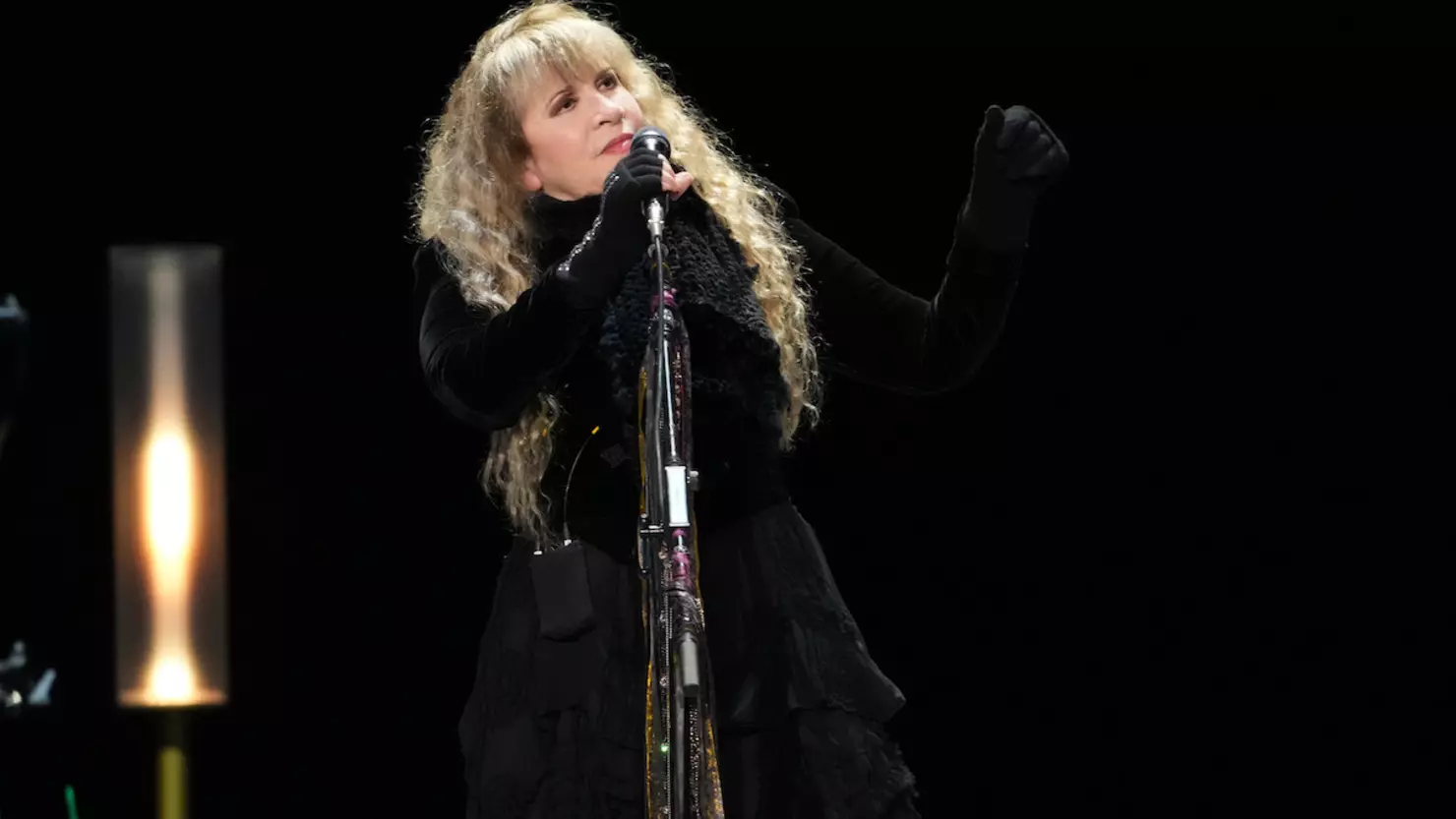

For a moment, the song stopped being a performance and became a shared act of care.
During a massive stadium show, Stevie Nicks began “Landslide,” one of the most personal songs in her catalog. Midway through the performance, emotion overtook her. Her voice faltered. The weight of the lyrics, written decades ago yet still raw, pressed in harder than expected.
That is when the crowd stepped in.
:max_bytes(150000):strip_icc():focal(680x220:682x222)/Stevie-Nicks-Bottlerock-performing-10924-b27a4f65e86748259b49d9a4a00179c8.jpg)
Seventy thousand voices rose almost instinctively, carrying the song forward as one. There was no cue, no announcement, no pause to organize the moment. Fans simply sang, word for word, filling the space with a chorus that felt less like applause and more like protection.
Nicks stood at the center of it, visibly moved. She let the audience sing for her, listening, absorbing, steadying herself. It was not a breakdown. It was a handoff. An artist trusting her audience to hold something sacred until she was ready to take it back.
“Landslide” has always been about reflection, change, and vulnerability. Written at a crossroads early in Nicks’ life, the song has aged alongside her and her listeners. That night, it felt as if every person in the stadium brought their own history into the lyrics, creating a collective memory layered over her own.
When Nicks rejoined the song, the moment landed even harder. Her voice returned with quiet strength, supported by the knowledge that she was not alone in carrying its meaning. The applause that followed was not explosive. It was reverent.
Clips of the moment spread quickly online, with fans calling it one of the most powerful live music experiences they had ever witnessed. Many noted that it captured something increasingly rare: a genuine, unscripted exchange between artist and audience, free of spectacle or pretense.
This was not about rescuing a performer who could not continue. Stevie Nicks has endured far more than a difficult verse. It was about love flowing in the opposite direction. For decades, she has given people songs to lean on. For a few minutes, they gave that support back.
In a career defined by mystique, resilience, and emotional honesty, this moment stands out precisely because it was unguarded. No crown. No distance. Just a woman, a song, and a legion of souls willing to carry her through it.
Sometimes, the most unforgettable performances happen when the artist does not sing alone.