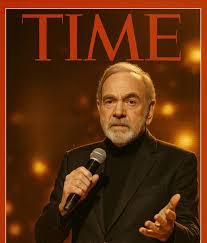

In a cultural moment increasingly driven by speed and short attention spans, Neil Diamond’s inclusion on TIME’s 100 Most Influential People list reads like a quiet but firm reminder of what lasting influence actually looks like.
Diamond’s career has never been about chasing trends. Instead, it has been built on songwriting that endures, performances that invite participation, and a voice that feels both personal and communal. Decades after his first hits, his music continues to live in stadiums, films, weddings, and late night singalongs, passed down rather than replaced.
TIME’s recognition places Diamond not just among current power brokers and tastemakers, but within a broader definition of influence. One measured in emotional reach rather than volume. Few artists can claim songs that have become part of collective memory in the way “Sweet Caroline,” “Song Sung Blue,” and “Cracklin’ Rosie” have. Fewer still can claim relevance across generations without reinvention or retreat.
The timing of the honor feels especially resonant. Since stepping back from touring due to health challenges, Diamond has remained present through his catalog and his continued cultural impact. His absence from the stage has not dimmed the resonance of his work. If anything, it has clarified it.
Industry peers have long pointed to Diamond’s rare balance of craftsmanship and accessibility. His songwriting blends simplicity with emotional specificity, allowing listeners to see themselves inside the music. That ability to create shared experience is precisely what influence looks like when stripped of hype.
The TIME 100 acknowledgment also reframes Diamond’s place in modern culture. He is often discussed as a legacy artist, a label that can suggest closure. This recognition argues the opposite. His work is not preserved. It is active. It still moves rooms, sparks connection, and anchors moments.
Public reaction to the announcement reflected that reality. Fans celebrated not just the honor, but the feeling of validation it brought. Many described Diamond as the soundtrack to their lives, a presence that has outlasted trends and technology alike.
Being named to TIME’s 100 Most Influential People does not change Neil Diamond’s legacy. It confirms it. Influence, in his case, is not about visibility or reinvention. It is about permanence.
In an era defined by what is new, Neil Diamond stands as proof that what lasts can still shape the present. And that kind of cultural force does not fade.