
Introduction
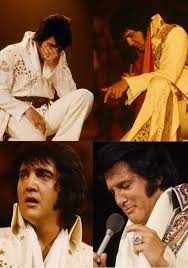
In the summer of 1977, only weeks before the world would lose him forever, Elvis Presley walked onto the stage carrying the visible weight of exhaustion and illness. His body was failing, his movements slow, his face swollen. To many watching, the sight was unsettling. Yet the moment he lifted the microphone to sing Hurt, something extraordinary happened. The frailty vanished. What remained was a voice of overwhelming authority, a reminder that the title of the King of Rock and Roll had never truly been in question.
This was not simply another concert performance. It was a final act of defiance. Sweat streamed down his face, his chest rose and fell with effort, and still he summoned a vocal force that silenced critics and stunned audiences. For a few minutes, time seemed suspended. This was not decline. This was confrontation.
The atmosphere inside the arena that summer carried a strange tension, a mix of devotion and foreboding. On stage stood a man who had altered the course of twentieth century music. Yet in these final moments, he appeared painfully human. The cameras did not flatter him. The famous Mexican Sundial suit shimmered under the lights, unable to disguise physical deterioration. To the untrained eye, it was distressing. To those who understood music, what followed was unforgettable.
Hurt, first made famous in the 1950s by Roy Hamilton, demanded more than vocal technique. It required emotional ruin. By 1977, Presley no longer needed to interpret the lyrics. Lines about betrayal and heartbreak mirrored his own reality. Divorce, isolation, dependency, and relentless pressure had stripped him bare. The song was no longer performance. It was testimony.
As the piano introduction began, Presley gripped the microphone tightly, his knuckles pale with strain. He was not singing for television cameras or record sales. He was singing to survive. His lower register remained rich and resonant, anchoring the melody. Then came the ascent. With each rising phrase, he shed the caricature painted by tabloids and reclaimed his authority.
Elvis had a way of speaking directly to the listener’s soul. In those last performances, nothing was hidden. The pain, the love, the loss were all right there.
The climax of the performance became a moment of pure will. As the song reached its peak, Presley attempted a vocal feat that would challenge even a singer in perfect health. He leaned back, sweat flying from his dark hair, and struck a soaring high note that cut through the orchestra like steel wrapped in velvet. In several performances that summer, including the widely discussed Rapid City show, he not only reached the note but held it, then demanded the band push higher.
It was a declaration. A message to the audience and perhaps to himself that the voice, the divine instrument, remained untouched by the chaos consuming his life. Critics who had mocked his appearance were forced into silence. The tragedy was not the loss of talent. The tragedy was that the body housing that talent could no longer endure.
Backstage, the mood was often somber. Onstage, the connection endured. The bond between Presley and his audience remained unbroken, charged with urgency and gratitude.
He was in pain, yes, but when he sang, he rose above it. He wanted the audience to know he loved them, and he gave everything he had left.
As the final note faded, applause erupted with a force that seemed to stagger him. He stood still, chest heaving, drenched in sweat, appearing both victorious and fragile. For a brief moment, he existed outside of time. A man who had poured every remaining ounce of strength into a room full of strangers.
Decades later, Hurt stands as one of the most defining documents of Presley’s final chapter. It is difficult to watch without a tightening in the chest, not only because of what followed weeks later, but because of the courage required to step beneath those lights. The performance captures the essence of the artist. Vulnerable. Broken. Undeniably magnificent.
The stage lights were dimming on the career of one of the greatest entertainers the world has known. Yet in the echo of that final note, Elvis Presley proved that while the body may weaken, the spirit and the voice can remain eternal.