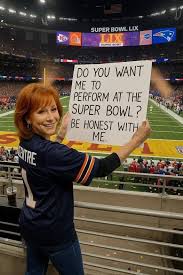
For years, the Super Bowl halftime show has functioned like a cultural mirror. It reflects not just what is popular, but what America wants to celebrate at a given moment. Loud when the country wants distraction. Flashy when it craves escape. Safe when it feels divided. But lately, something has begun to change, and the Super Bowl can feel it coming.
The shift is subtle, but unmistakable.
Audiences are responding less to spectacle for its own sake and more to meaning. The biggest reactions in recent years have not come from the most elaborate stage builds or surprise guest lists. They have come from moments of authenticity. Artists standing still. Letting songs breathe. Letting history speak without apology.
This is not about nostalgia. It is about grounding.
After years of cultural acceleration, Americans are showing signs of fatigue with constant reinvention. There is a growing appetite for voices that have lasted, not because they adapted to every trend, but because they stayed true to something deeper. Craft. Story. Emotional honesty. Music that does not shout for attention, but earns it.
The Super Bowl, whether intentionally or not, has begun to respond. Conversations around future halftime performers increasingly center on legacy, substance, and connection rather than viral potential alone. The question is no longer just who can dominate the moment, but who can hold it.
This reflects a broader cultural recalibration. In entertainment, politics, and media, there is a renewed interest in durability. In people who have weathered change without losing themselves. In work that feels built rather than engineered.
The halftime show sits at the intersection of all of this. It is the one stage that still commands collective attention in a fragmented culture. When it chooses restraint over noise, or meaning over excess, it sends a signal.
That signal is beginning to register.
You can hear it in the calls for artists known for songwriting rather than spectacle. You can see it in the reverence audiences show when a performance slows the room instead of overwhelming it. You can feel it in the way silence, when used with confidence, now lands louder than pyrotechnics.
The Super Bowl does not lead culture on its own. But it is remarkably good at sensing where the current is moving. Right now, that current is pulling away from distraction and toward substance.
Something is shifting.
And when the next halftime show arrives, it may not try to outdo the past. It may try to remind the country of what it values when the noise falls away.
The Super Bowl can feel it coming because, in many ways, America already has.