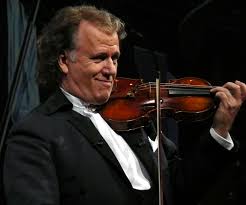
For much of modern history, classical music carried an invisible barrier. It was admired, respected, and often kept at a distance. Concert halls felt formal. The rules felt rigid. The audience was expected to listen, not participate. André Rieu changed that without ever asking permission.
He did it with a violin in his hands, a smile on his face, and an unshakable belief that music belongs to everyone.
Rieu never approached classical music as something to be protected from the public. He approached it as something to be shared with them. Waltzes, operatic themes, and orchestral standards were not museum pieces in his world. They were living conversations, meant to be felt, remembered, and celebrated together.
With the Johann Strauss Orchestra, Rieu transformed concerts into communal experiences. People did not simply attend. They sang. They laughed. They danced. They cried. The music spilled beyond the stage and into the audience, dissolving the traditional divide between performer and listener.
Critics once questioned his approach, accusing him of simplifying a complex art form. Rieu never argued back. He let the audiences answer. Millions of people around the world, many of whom had never attended a classical concert, found themselves emotionally fluent in a language they had been told was not for them.
That is the heart of his influence.
Rieu did not dilute classical music. He translated it. He removed fear and replaced it with warmth. He reminded people that waltzes were once written for ordinary dancers, not elite institutions. That these melodies were born in joy, movement, and shared experience.
His concerts feel less like performances and more like gatherings. The elegance remains, but it is paired with humanity. Musicians smile at one another. Rieu speaks directly to the audience, often sharing stories that make the music feel personal rather than distant. The result is intimacy on a grand scale.
Beyond the spectacle, there is discipline. Rieu is a meticulous musician who respects tradition deeply. His interpretations are rooted in history, even as his presentation invites modern participation. That balance is what allows his work to resonate across generations and cultures.
In cities around the world, his concerts have become rituals. Families attend together. First-time listeners sit beside lifelong fans. Language barriers disappear as melody takes over. In those moments, nationality and background fade. What remains is feeling.
André Rieu’s greatest achievement is not ticket sales or global tours. It is the emotional permission he has given people to engage with classical music without intimidation. He made it human again.
In a world often divided by difference, Rieu’s music reminds us of something simple and enduring. Before we spoke in words, we spoke in sound. Rhythm. Harmony. Emotion.
André Rieu did not change classical music by breaking it.
He changed it by opening it.
And in doing so, he turned it into a shared human language.