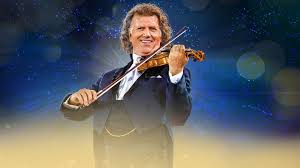
At 75, André Rieu stands in a category that transcends genre, geography, and trend. He is not simply one of the most successful classical musicians in the world. He is one of the most recognizable live performers of any kind, anywhere.
That distinction did not come quickly, and it did not come easily.
For decades, Rieu worked against the current. Classical music, as the industry defined it, was meant to be preserved, not shared broadly. Concert halls were formal. Audiences were expected to observe quietly. Emotion was something to be contained. Rieu challenged all of it by doing something radical in its simplicity: he treated classical music as a shared human experience.
With his Johann Strauss Orchestra, he brought waltzes and symphonic works out of academic spaces and into stadiums, town squares, and open-air arenas. He invited audiences to clap, sing, sway, and sometimes cry. Critics once dismissed the approach as populist. Audiences, however, understood immediately. Millions showed up.
By his mid-career years, Rieu was selling out venues that many pop stars struggle to fill. His concerts became global events, drawing families, first-time classical listeners, and lifelong fans into the same space. His albums climbed charts rarely touched by orchestral music. His televised performances reached homes far beyond the traditional classical audience.
At 75, the results are undeniable. Rieu has sold tens of millions of albums, performed for tens of millions of people, and built one of the most enduring touring operations in music history. Yet numbers alone do not explain his recognition.
What truly sets him apart is trust.
Audiences trust Rieu to offer joy without irony. To present beauty without apology. To remind them that elegance and emotion still matter in a world that often feels rushed and noisy. His concerts feel less like performances and more like communal rituals, moments where strangers are briefly united by melody and memory.
He is recognized not only as a musician, but as a cultural bridge. In countries divided by language, politics, or history, his music travels freely. Waltzes written centuries ago feel current in his hands, not because they are modernized, but because he allows their emotional truth to remain intact.
Even now, Rieu continues to tour with the same visible delight that marked his early years. He smiles easily onstage. He jokes with his orchestra. He acknowledges his audience as partners, not spectators. Age has not dulled his presence. If anything, it has sharpened his understanding of why he does this work.
At 75, André Rieu has reached a level of recognition few artists ever attain because he did not chase relevance. He chased connection.
And in doing so, he became something rarer than a virtuoso or a star. He became a shared experience, passed from generation to generation, carried forward by people who may not know the names of the composers but know exactly how the music made them feel.
That is recognition of the highest order.