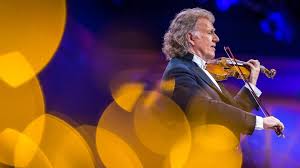
Hollywood Boulevard has honored thousands of names, but few have changed the meaning of recognition itself. With the unveiling of his star on the Hollywood Walk of Fame, André Rieu did more than join an exclusive list. He reframed what global influence, cultural reach, and musical legacy can look like in the modern era.
For decades, the Walk of Fame has celebrated actors, pop icons, and entertainment titans whose work defined mass culture. Rieu’s inclusion signals something different. It acknowledges a man who took classical music out of concert halls, removed its barriers, and transformed it into a shared human experience across continents.
Rieu did not arrive in Hollywood by following trends. He arrived by defying assumptions.
As the founder and conductor of the Johann Strauss Orchestra, he built a movement rooted in joy, accessibility, and emotional connection. His concerts feel less like formal recitals and more like communal celebrations. Waltzes become invitations. Audiences sing, sway, laugh, and cry together. In cities where classical music once felt distant or elite, Rieu made it familiar and welcoming.
That is why this star matters.
At the ceremony, the crowd reflected the scope of his impact. Fans traveled from multiple countries, many carrying flags and flowers. Some had attended dozens of his concerts. Others spoke about discovering classical music for the first time through his performances. The applause was long, warm, and deeply personal.
In his remarks, Rieu remained characteristically humble. He spoke about his hometown of Maastricht, his parents, and his belief that music exists to bring people together, not to impress them. He did not frame the honor as a personal victory, but as recognition of an idea: that beauty belongs to everyone.
The symbolism of his star goes beyond the name etched in terrazzo. It represents a rare bridge between worlds. Between classical tradition and popular culture. Between European heritage and global audiences. Between refinement and joy.
Industry observers note that Rieu is one of the few artists whose live audience numbers rival those of major pop tours, yet his repertoire centers on composers from centuries past. That paradox is precisely why his presence on Hollywood Boulevard feels historic. He did not dilute the music. He expanded its reach.
In doing so, André Rieu redefined what influence looks like. It is not measured only in charts or headlines, but in connection. In the ability to make millions feel included in something timeless.
As fans gathered around the star long after the ceremony ended, taking photos and quietly standing in its glow, the moment felt less like a conclusion and more like affirmation.
Hollywood honored André Rieu for his contribution to entertainment. History will remember him for something larger.
He reminded the world that music, at its best, does not divide eras or audiences.
It unites them.