Introduction
The Song Nobody Bet On: How Riley Green & Ella Langley Accidentally Made Country History
Country music has never done its best work when it’s over-planned. The moments that last—the ones people talk about years later—rarely arrive with a perfectly timed rollout or a “viral strategy.” They arrive the old-fashioned way: one song, two voices, and a feeling that sneaks up on you before you can explain it.
That’s why the story of Riley Green and Ella Langley—tied to the runaway reaction to “You Look Like You Love Me”—has struck a nerve with listeners who know the difference between a trend and a truth. Because on paper, this wasn’t supposed to be a moment. It wasn’t dressed like a grand statement. It sounded like a solid country track, a duet cut in the natural rhythm of artists who actually love the genre.
And then it caught fire.
Not like a marketing campaign. Like a secret people couldn’t keep.

How a “Normal” Duet Started Moving Like a Memory
When the song began circulating online, the shares didn’t feel like promotion. They felt like testimony. That’s a big difference, especially to older fans who remember how real hits used to spread—one person playing it for another, someone dropping coins into a jukebox, a song becoming “our song” in a town before a label ever knew what it had.
The reaction wasn’t, “Listen to this because it’s everywhere.”
It was, “Listen to this because it reminded me of something I miss.”
That’s the kind of momentum no team can manufacture. It only happens when a track taps into a shared human nerve: flirtation that turns serious, pride that hides tenderness, love that tries to play it cool—until the truth leaks out anyway.
And in a genre built on truth, that matters.
Chemistry You Can’t Script
Plenty of duets sound good. Far fewer sound alive.
What listeners heard in Riley and Ella wasn’t polish for polish’s sake. It was chemistry—messy in the best way, like real conversation. Riley Green doesn’t sound like a man hitting marks; he sounds like someone reacting in real time. There’s a looseness in his delivery, a front-porch ease that makes the song feel less like a performance and more like a moment you walked in on.
Ella Langley, meanwhile, doesn’t sing like she’s “playing the part” of a country girl. She sounds like she’s standing in her own boots. There’s bite in her phrasing, brightness in her tone, and a confidence that doesn’t feel rehearsed. She doesn’t ask permission from the song—she claims it.
But the real magic isn’t in either voice alone.
It’s in the space between them.
That little pause that feels like a raised eyebrow. That half-beat of hesitation that sounds like someone thinking, Are we really doing this? That conversational push and pull—where you can almost hear them smiling—creates the feeling that something is happening beyond the lyrics. You can’t fake that. You either have it or you don’t.
And they did.
Why Older Fans Recognized It First
Here’s what’s interesting: a lot of younger listeners discovered the song through clips. Older listeners recognized it through pattern.
They’ve heard enough country music to know when something is built to “fit a playlist” versus built to tell a story. They know when an artist is chasing a moment, and when a moment simply finds the artist.
Country’s most beloved duets—whether they were heartbreakers, reconciliations, or playful back-and-forths—worked because they sounded like real people in a real scene. They didn’t feel airbrushed. They had edges. They had breath. They had room for interpretation.
Riley and Ella’s song carries that old strength: it leaves space.
It doesn’t explain everything. It doesn’t over-sell emotion. It lets the listener step in and supply their own memories. That’s why it spreads the way it does. People aren’t just listening—they’re remembering.
Then Came the Awards—and the Story Got Bigger
And then, as often happens in country music when the public refuses to let go of a song, the industry had to acknowledge what was happening.
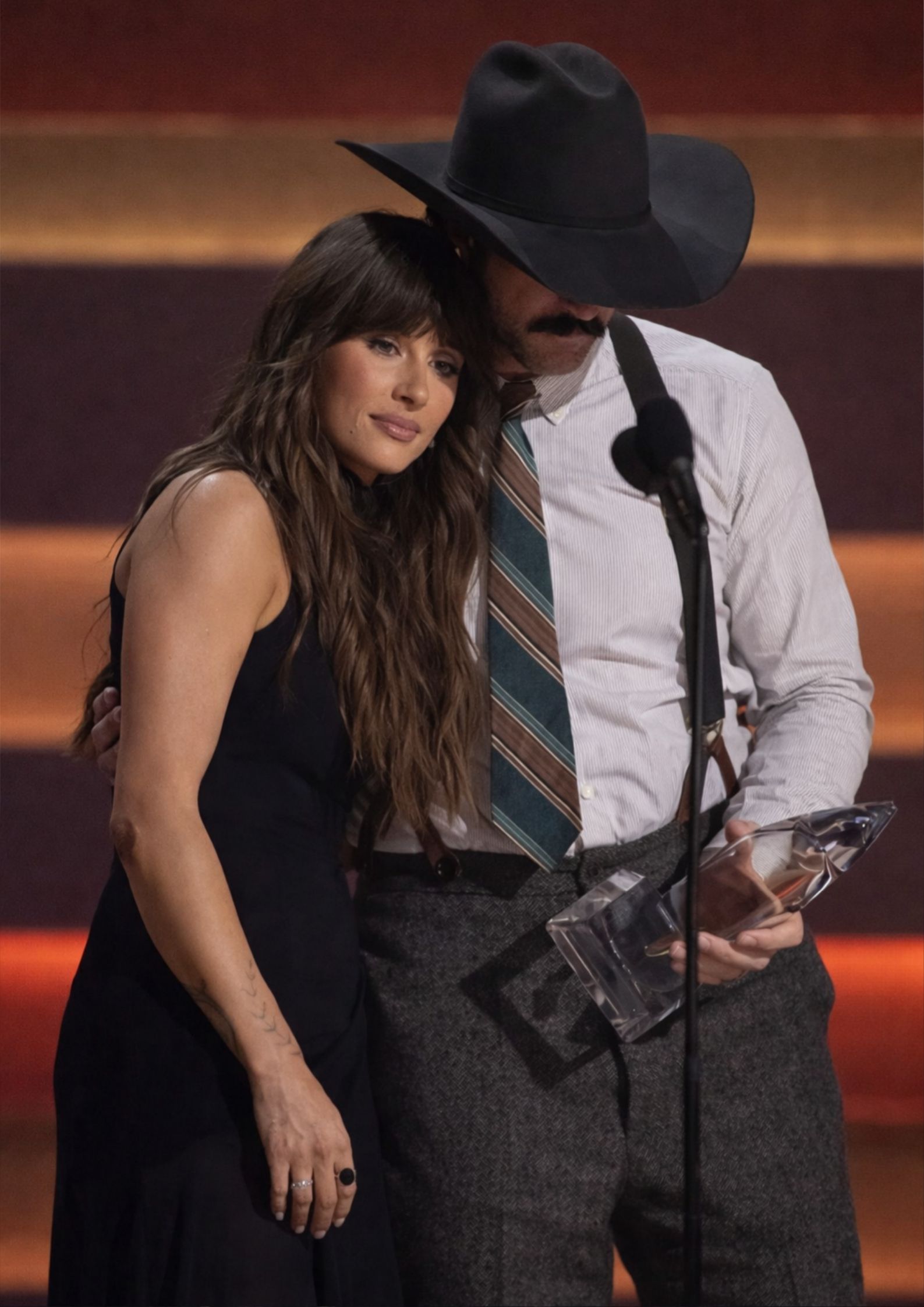
Suddenly the conversation wasn’t just “nice duet.” It became, “Did this just change the year?” The kind of recognition that turns a track into a footprint. The kind of night where trophies—especially multiple wins in one sweep—reframe a song from “unexpected hit” into “moment that mattered.”
But the more interesting question isn’t how many awards it collects.
It’s what it suggests.
Was this lightning in a bottle—one perfect collision of voices, timing, and feeling?
Or is it the first chapter of something bigger: a partnership that could reshape what modern country duets sound like when they stop trying so hard and start telling the truth again?
The Accidental History of It All
The best part of this story is that no one can fully take credit for it. Not the label. Not the rollout. Not even the artists, at least not in the way people assume.
Because the song didn’t behave like something “released.”
It behaved like something discovered.
That’s how country history is often made—not by guarantees, but by surprises. Not by the songs everyone bets on, but by the ones that slip through the cracks, find the right hearts, and refuse to leave.
In this genre, the stories that last aren’t the ones that were destined.
They’re the ones nobody saw coming… until the whole crowd started singing along.