
Introduction
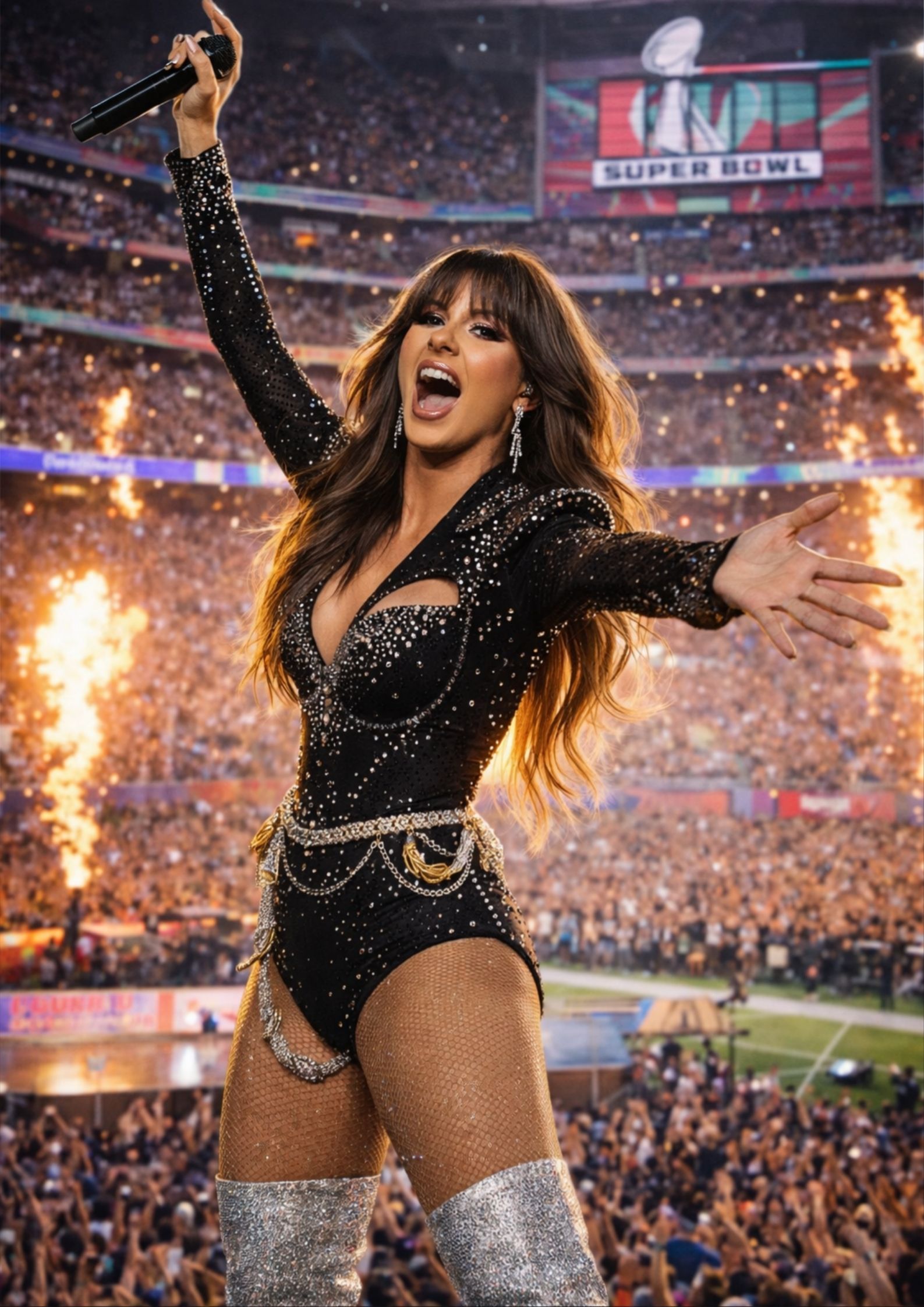
“12 Minutes Ago” Went Viral — But Here’s What’s Actually Reshaping the Super Bowl Halftime Conversation
For a few breathless minutes online, it felt like the internet had decided the Super Bowl didn’t own halftime anymore.
Posts claiming “320M views and climbing” began ricocheting across social platforms, insisting that Erika Kirk’s “All-American Halftime Show” would run during the exact halftime window—but not on NBC, the official broadcaster. The hook was irresistible: a parallel broadcast, a different set of values, and the promise of a new kind of cultural moment—one built for streaming-first America.
What’s real beneath the noise is still significant. Turning Point USA did, in fact, announce an alternative program designed to counterprogram the official halftime show, positioning it as a faith-and-patriotism-forward option for viewers who felt the mainstream presentation no longer spoke to them.
The “Alternative Halftime” Wasn’t a Rumor — It Was a Strategy
The bold idea wasn’t simply “another concert.” It was a statement about choice—and about the modern attention economy, where the loudest broadcast is no longer automatically the biggest stage.
Reports ahead of Super Bowl Sunday outlined that the All-American Halftime Show would be available through online streams and partner outlets rather than the main network broadcast. And after the game, coverage indicated the show drew millions of viewers online, even as the official halftime performance remained the dominant mass-audience event.
For older, thoughtful viewers—people who still remember when families watched the same three channels and shared the same cultural “watercooler”—this is a striking shift. We’ve entered an era where even America’s biggest communal broadcast can be “split-screened” by belief, identity, and algorithm.
The Brandon Lake + Ella Langley Rumor: Why It Lit a Match
The viral posts didn’t just promise a counterprogram. They teased a headline-making opening: worship star Brandon Lake paired with country breakout Ella Langley—a crossover built to pull two passionate audiences into one stream.
But here’s the careful line between excitement and confirmation: credible pre-game reporting focused on a different announced lineup—Kid Rock, Lee Brice, Brantley Gilbert, and Gabby Barrett—and did not list Lake or Langley as confirmed performers. That doesn’t stop social media from dreaming bigger, of course. It rarely does.
Still, the reason the rumor spread so fast tells us something true: people are hungry for performances that feel personal, not corporate—music that sounds like conviction instead of choreography.

Why Ella Langley’s Name Carries Weight Right Now
Even outside halftime chatter, Ella Langley has momentum. Her debut album hungover was announced in 2024 and released August 2, 2024—music that leans into lived-in emotion rather than glossy perfection.
That matters because halftime—official or alternative—isn’t really about a setlist. It’s about symbolism. Langley represents a new wave of country storytelling that many older listeners recognize instantly: songs that don’t shout, but still hit hard.
The Bigger Question: Is Halftime Becoming a Mirror of America?
Critics argued that counterprogramming would fracture a moment that’s supposed to unify. Supporters argued the opposite—that unity without representation isn’t unity at all, and that choice is the point.
And then reality did what it always does: it landed somewhere in the middle. Coverage after Super Bowl Sunday suggested the alternative show drew a meaningful audience, even as the official halftime remained the cultural main event.
So maybe the lasting headline isn’t the viral “12 minutes ago” drama. Maybe it’s this: in 2026, the Super Bowl can still be America’s biggest stage—but it’s no longer the only one.
If you had the remote at halftime, what would you choose: the official show, the alternative stream, or turning the volume down and talking with family?
:max_bytes(150000):strip_icc():focal(677x258:679x260)/Ella-Langley-081125-1-aa82ff2709fa487489f464fb99805bf3.jpg)