
Introduction
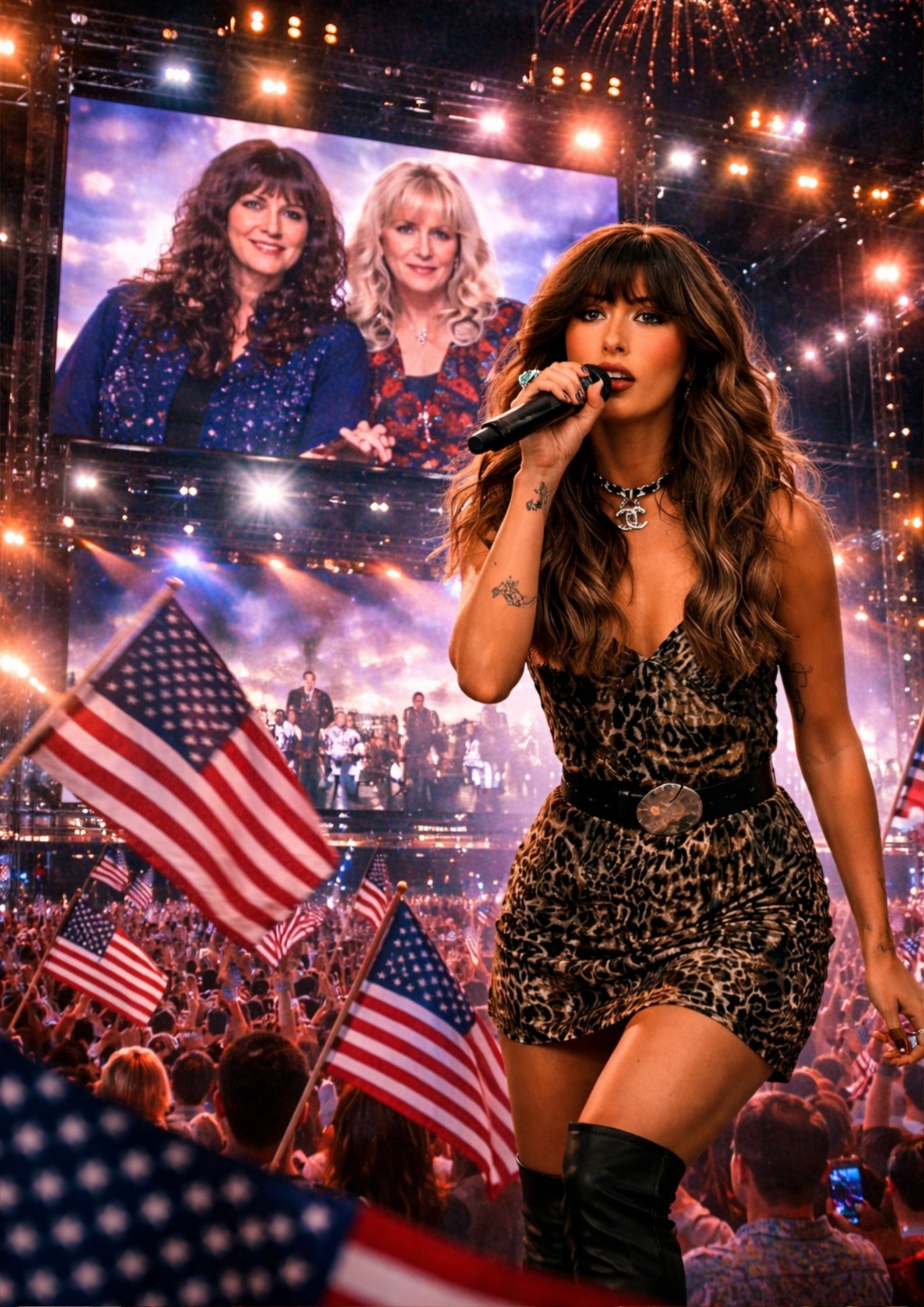
When Country Meets Rock: Why Ella Langley’s “Barracuda” Tease Feels Like a Moment Waiting to Happen
There are moments in music that arrive quietly—no stage lights, no announcement—yet somehow linger longer than a full concert. Recently, Ella Langley gave fans one of those moments. Sitting casually behind her couch, electric guitar in hand, she played the unmistakable opening riff of Barracuda—a song that has echoed through generations since Heart first unleashed it in 1977.
It lasted only a few seconds.
But for many listeners, it felt like something much bigger.
Because sometimes, all it takes is a glimpse—a sound, a tone, a familiar riff—to spark the imagination. And in that short clip, Langley didn’t just play a classic rock intro. She opened the door to a question that fans across country music are now asking:
What if she finished the song?
A Quiet Moment That Spoke Loudly
The timing could not have been more fitting. As the holiday season brings a natural pause to the relentless pace of touring, many artists step away from the spotlight. But musicians rarely step away from music itself.
They play.
They experiment.
They return to the songs that shaped them long before their own names were printed on tickets.
That’s exactly what Langley appeared to be doing—unwinding, perhaps, but still deeply connected to her craft. The setting was informal. The tone was relaxed. She even joked in the caption that she was “much better at this song on Guitar Hero,” a line that instantly resonated with anyone who grew up discovering music through late-night gaming sessions and worn-out controllers.
And yet, beneath that casual humor, there was something unmistakable in the sound.
Precision.
Confidence.
And a kind of raw edge that felt perfectly suited to the song.
Why “Barracuda” Fits Her So Well
“Barracuda” is not an easy song to carry.
It demands presence. It requires attitude. And above all, it calls for a voice that can move between control and intensity without losing its center. When Ann Wilson first recorded it, she delivered something that was both fierce and deeply grounded—a performance that has stood the test of time.
What makes Langley’s snippet so compelling is not just that she can play the riff.
It’s that listeners can already hear the rest in their heads.
Her voice—gritty when it needs to be, restrained when it matters—feels capable of stepping into that space without imitation. She wouldn’t need to recreate the original. She could reinterpret it, bringing a country-rooted authenticity to a song born in rock rebellion.
And that blend is not as unlikely as it might seem.
Country music has always borrowed from rock, just as rock has borrowed from country. At their core, both genres tell stories of defiance, heartbreak, resilience, and identity. “Barracuda,” with its sharp edge and emotional undercurrent, fits naturally into that shared tradition.
Fans Hear It Too
If the clip proved anything, it’s that Langley wasn’t the only one imagining what could come next.
Within hours, comments began to fill with a familiar refrain:
“Sing it.”
“We need more.”
“You’ve got the voice for this.”
It’s the kind of response that cannot be manufactured. It comes from recognition—the sense that an artist has stepped into something that fits them so well, it feels inevitable.
And Langley has already shown she can carry that kind of weight.
Earlier this year, her cover of Dreams alongside Maggie Antone revealed a different side of her artistry—one rooted in subtlety, atmosphere, and emotional control. That performance didn’t just showcase her voice. It revealed her instincts.
She understands how to inhabit a song.
That matters more than technique.
The Balance Between Softness and Fire
Part of what makes this moment so intriguing is the contrast it highlights in Langley’s music. In recent releases like “You Look Like You Love Me,” she leans into vulnerability—soft phrasing, emotional nuance, and a sense of intimacy that draws listeners closer.
But those who have followed her longer know there is another side.
A louder side.
A sharper edge.
Tracks like her collaboration with Koe Wetzel showed that she is not afraid of intensity—that she can step into a more aggressive, rock-infused space without losing her identity. That balance—between softness and fire—is rare. And it is exactly what a song like “Barracuda” demands.
More Than a Cover—A Statement
If Langley were to record a full version of “Barracuda,” it would not simply be another cover added to a growing list of reinterpretations.
It would be a statement.
A statement about where country music is willing to go. About the boundaries between genres continuing to blur. About a new generation of artists who are not afraid to reach back into the past and bring something forward in a new voice.
For older listeners especially, there is something deeply satisfying in moments like this. They bridge time. They connect the music of yesterday with the voices of today. They remind us that great songs do not belong to one era—they belong to anyone who can carry them forward with honesty.
A Moment That Feels Like the Beginning
For now, the clip remains just that—a glimpse, a possibility, a spark.
But sometimes, the smallest moments in music are the ones that linger the longest. They leave space for imagination. They invite listeners to fill in what comes next. And in doing so, they create a kind of anticipation that no full production can replicate.
Somewhere, a fan is replaying that short clip again.
Hearing the riff.
Imagining the voice.
Waiting for the moment when it might finally arrive.
Because if Ella Langley ever decides to finish what she started that day, it may not just be a cover.
It may be one of those rare moments when a song finds a new home—and sounds like it was meant to be there all along.