
Introduction
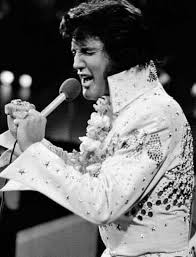
It was a tropical night in Honolulu, yet the stage lights burned brighter than the noon sun. On January 14, 1973, the world briefly collapsed into a single hour, carried by unstable satellite signals, as Elvis Presley stepped onto the stage of the Honolulu International Center. He appeared slimmer than ever, his skin bronzed by Pacific air, wearing the legendary American Eagle jumpsuit, a seventy pound costume encrusted with jewels and studs designed to catch light as if pulled from space itself.
To revisit the footage today, or to hear modern tributes performed by artists such as Jay Ashton, is to witness the absolute summit of a cultural phenomenon. Aloha from Hawaii was not merely a concert. It was the first entertainment special by a solo artist broadcast live via satellite. More than one billion viewers, nearly a quarter of the planet’s population at the time, tuned in as the boy from Tupelo stood before the world to prove he was still the King of Rock and Roll.
The path to that night was charged with tension unique to moments when history is about to be made. Presley was navigating personal turmoil and a recent divorce, yet he transformed that instability into physical discipline. He committed to an extreme diet and relentless rehearsal schedule, fully aware that unforgiving television cameras would project his image from Tokyo to London without mercy.
The director of the broadcast, Marty Pasetta, later recalled the intensity surrounding the production. Presley, usually relaxed before shows, displayed visible anxiety. He understood there would be no second take, no safety net, no retreat once the signal went live.
He had lost a lot of weight for the show and he looked fantastic. He wanted to do something that had never been done before. He said I want to say hello to the world and that is exactly what he did.
The set list unfolded as a carefully constructed emotional arc. Hard edged rock and blues driven performances such as Burning Love and Steamroller Blues gave way to operatic heartbreak in You Gave Me a Mountain. This was no longer the rebellious hip shaking figure of 1956. This was a seasoned artist, a man shaped by loss and experience, delivering songs with the full weight of lived years.
When Presley performed My Way, a song closely associated with Frank Sinatra, he stripped it of bravado and replaced it with vulnerability and defiance. He did not simply sing the lyrics. He exposed himself through them, turning the performance into a public confession broadcast across the globe.
Presley’s bond with Hawaii carried a spiritual dimension far beyond tourism or film promotion. From the production of Blue Hawaii to benefit concerts for the USS Arizona Memorial, the islands offered him refuge from the relentless chaos of mainland fame. Archival footage of his arrival, draped in oversized flower leis and greeting local crowds, shows a man unusually at ease. Today, a bronze statue outside the Honolulu venue stands as a permanent testament to that connection, freezing the King at his zenith.
Musically, the night was anchored by the TCB Band, operating with near telepathic precision. Bassist Jerry Scheff and drummer Ronnie Tutt provided a powerful rhythmic foundation that allowed Presley to soar without restraint.
That was the peak. We knew it was big but when you are inside the storm you do not realize how big it really is until many years later. That night Elvis was the storm.
Seen through the lens of history, however, Aloha from Hawaii carries a bittersweet aftertaste. The broadcast stands as Presley’s final unchallenged summit before a rapid decline that ended his life just four years later. In modern tribute videos circulating online, often featuring vocal recreations by performers like Jay Ashton, the message remains clear. The man may be gone, but the sound endures.
Ashton’s interpretations of songs such as Hawaiian Wedding Song and Welcome to My World echo the smooth resonance of Presley’s voice, reminding listeners of an instrument that permanently altered popular music. These recreations do not replace the original moment. They underline its permanence.
The closing image of the broadcast remains among the most iconic in rock history. As the band played Can’t Help Falling in Love, Presley knelt and spread the enormous cape of his American Eagle suit, its gold lining catching the stage lights. He appeared simultaneously heroic, divine, and exhausted. With a single gesture, he tossed the cape into the audience, surrendering a piece of himself to the fans who had carried him there.
Half a century later, the satellite technology that once made the broadcast possible has faded into obsolescence. Yet the resonance of that night remains untouched. Whether viewed through aging archival footage or honored through contemporary tribute performances, Aloha from Hawaii endures as the most complete document of Elvis Presley’s greatness. It was the moment he held the world in his hands, offered a crooked smile, and let go.