

Courtney Hadwin, the Durham-born singer who first captured global attention with her jaw-dropping America’s Got Talent audition at age 13, has stunned fans by deleting or hiding the viral covers that initially propelled her to stardom.
The bold move comes just as she unveils her long-awaited debut album, Little Miss Jagged, a record that defies easy genre classification and firmly asserts her artistic identity.

“I feel like I have to prove myself that little bit more every single day,” Hadwin admitted in a recent interview, reflecting on both her journey and the decision to curate her online presence.
While most of her iconic covers are no longer available on her YouTube channels, a handful still exist on TikTok, and some have been preserved by fan accounts. Over the years, she’s covered a range of legendary artists, from Etta James and Tina Turner to Janis Joplin, James Brown, Aretha Franklin, Hozier, Amy Winehouse, Adele, and Aerosmith.

From Viral Sensation to Independent Artist
Hadwin’s meteoric rise began with her unforgettable rendition of Otis Redding’s “Hard to Handle,” earning international acclaim and sparking a frenzy in the music industry. At the time, many attempted to mold her into a conventional pop star, but Hadwin resisted, instead choosing to make music that reflected her passions and personal experiences.
Her debut album, Little Miss Jagged, released on September 15, 2025, is a testament to that independence. It spans bouncy pop-punk, epic ballads, frenetic funk, Motown-inspired modern pop, and old-school R&B — all united by Hadwin’s extraordinary vocal prowess. Tracks like the high-energy lead single “Electric” showcase her fearless approach: “Let the power of the music take me away!” she sings, underlining her personal mission to fully own her artistry.

Finding Her Own Voice
Hadwin’s journey hasn’t been easy. After AGT, she was thrust into writing sessions with producers and songwriters who often failed to understand her sound. “It was pure Ariana Grande pop, which just wasn’t me at all,” she recalled. A label folding shortly before her 16th birthday left her feeling adrift, yet she refused to compromise her musical identity.
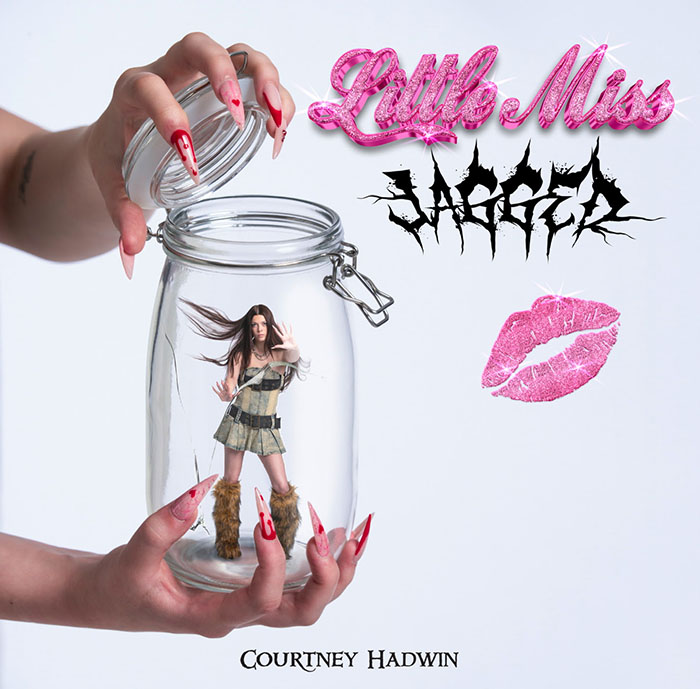
It wasn’t until she met producer Kevin Bowe, whose credits include Etta James and Joe Cocker, that Hadwin found her stride. Together, they built Little Miss Jagged, an album she describes as “the most personal music I’ve ever written.” For the first time, she could write vulnerably, using songwriting as her outlet. “I’m not very good at talking about my feelings, so songwriting has become that outlet for me,” Hadwin said.
Growing Up in the Spotlight
Hadwin’s career has been defined by growing pains in public view. “After AGT, everything hit me at once. Social media was a huge part of growing up, and a lot of people just wanted me to stay that 13-year-old girl,” she explained. Songs like “You Only Love Me When I Lie” confront that reality head-on, grappling with fans’ desire to hold her in a fixed image while she evolves as an artist.
Despite the challenges, Hadwin’s fanbase continues to grow, boasting 3.7 million followers across TikTok, Instagram, and Facebook. Her music is celebrated not only for her gold-plated voice but also for its raw authenticity and range, from the bluesy swagger of soul classics to the high-octane energy of rock and funk.
Moving Forward on Her Own Terms
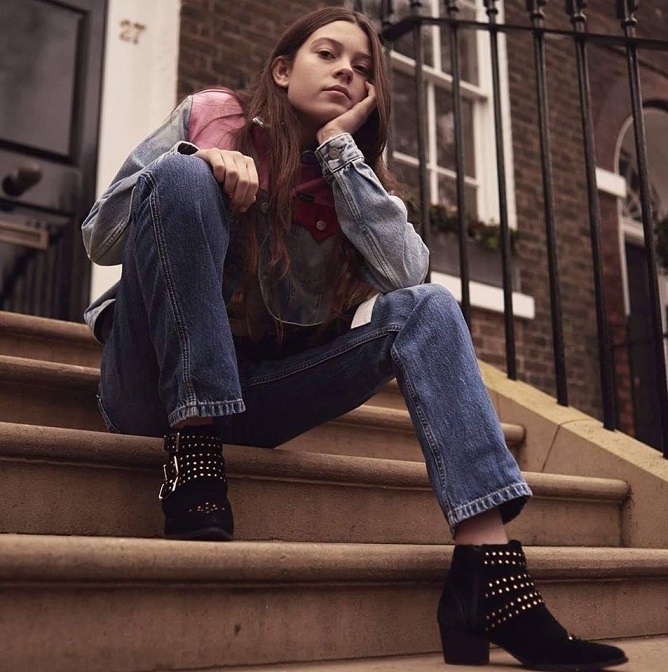
By removing her older viral covers from YouTube, Hadwin signals a new chapter — one in which she defines her legacy on her own terms. While fans may mourn the absence of her early performances, the album demonstrates that Hadwin’s evolution is well worth the wait.
“It’s been hard, I’m not gonna lie. But some days, it just makes everything harder — I feel like I have to prove myself that little bit more every single day,” she said. Little Miss Jagged is both a culmination of years of personal growth and a bold declaration: Courtney Hadwin is no longer just a viral sensation — she’s an artist in full command of her voice and her story.