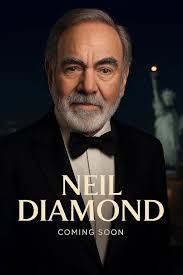
For decades, Neil Diamond’s songs have been woven into the emotional fabric of millions of lives. From stadium sing-alongs to solitary late-night listens, his music has always felt personal, even when shared by thousands at once. Now, that sense of intimacy is moving to a new stage. Neil Diamond’s life and legacy are finally being explored on the big screen, offering audiences a closer look at the man behind the unmistakable voice.
This long-anticipated film is not positioned as a glossy celebration of hits alone. Instead, it aims to tell the fuller story. The rise, the cost of success, the quiet struggles, and the resilience that shaped one of America’s most enduring songwriters. For fans who know every lyric by heart, the project promises something deeper than nostalgia. It promises context.
Diamond’s journey has always been more complex than his public image suggested. Behind the confidence of “Sweet Caroline” and the romantic sweep of “Hello Again” was a fiercely private artist, driven by self-doubt as much as ambition. The film traces his early days in Brooklyn, his determination to write his way out of anonymity, and the discipline that kept him working when others faded.
What sets this project apart is its willingness to slow down. Rather than racing through chart-topping milestones, the film reportedly lingers on moments of uncertainty. Creative ruts. Personal losses. The emotional toll of life on the road. These chapters help explain why Diamond’s later work, especially in his final albums, carried such reflective weight.
The film also confronts the reality of his Parkinson’s diagnosis, not as a tragic ending, but as a defining chapter. Diamond’s decision to step away from touring marked a profound shift, both for him and for his fans. The screen adaptation treats this moment with restraint, emphasizing dignity and acceptance rather than spectacle.
At its core, the film explores why Diamond’s music endured when so much else faded. His songwriting never chased irony or detachment. It aimed straight for the heart. Love, longing, faith, and hope were never treated as outdated ideas. They were treated as essential truths.
For longtime fans, the movie offers recognition. For new audiences, it serves as an introduction to an artist whose influence quietly shaped modern American songwriting. And for Diamond himself, it feels like a thoughtful summation rather than a victory lap.
Neil Diamond once said that writing songs was his way of making sense of the world. This film appears to follow the same philosophy. It does not attempt to mythologize him beyond recognition. It simply allows his life, like his music, to speak plainly and honestly.
After a career built on connection, it feels fitting that his story is finally being told in a way that invites audiences to listen, reflect, and understand the man behind the music.